In the previous blogs, we saw that wine is a representation of new life, of resurrection life. We also saw how the Lord Jesus turned water into wine at the wedding in Cana, as a representation of the new covenant that God will make with Israel.
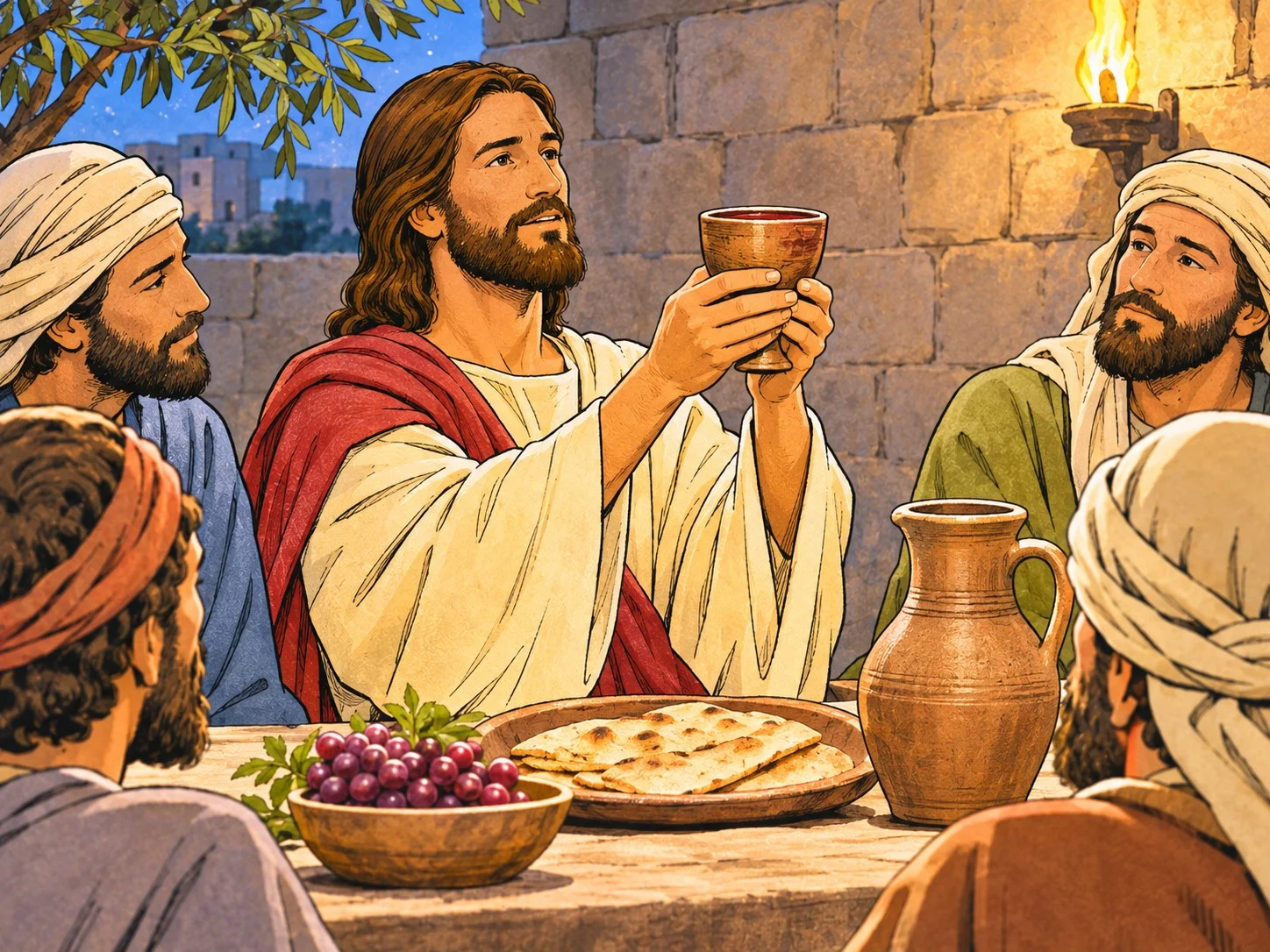
But wine also appears at another special meal. On the evening before Jesus was to be handed over, He celebrated a Passover meal with His disciples, as God had prescribed for Israel. He did not institute a new meal, but observed an existing institution and explained to His disciples what the bread and the drinking cup represented. They pointed to Him and to what was about to happen: His suffering, death, and resurrection.
the blood of the new covenant
During the Passover meal, Jesus takes the drinking cup, gives thanks, and gives it to His disciples. He says that this is the blood of the new covenant, which is poured out for many (Matt. 26:27-28; Luke 22:20).
Later, Paul writes about this to the Corinthians. He had received from the Lord Himself what he passed on to them concerning the meaning of the bread and the drinking cup (1 Cor. 11:23).
1 Corinthians 11 (based on ISA)
²⁵ In the same way also the drinking cup, after the meal, saying: This drinking cup is the new covenant in My blood. Do this, as often as you drink it, in remembrance of Me.
The wine in the drinking cup is a representation of His blood. In the sacrifices, the blood was collected and applied to the altar, and in certain sacrifices even brought into the sanctuary. The blood was therefore not simply discarded, but had a special significance.
The blood of those sacrifices points to Christ, who would shed His blood and die. But He would not remain in death. God raised Him from the dead. He is the Living One, who has conquered death.
The wine in the drinking cup is a beautiful representation of this. It is a spirituous liquid that speaks of new life, of the life that has conquered death.
a covenant with Israel
The new covenant of which Jesus speaks is the covenant that JAHWEH had announced through Jeremiah. As we saw earlier, He will make it with the house of Israel and the house of Judah (Jer. 31:31).
That covenant is therefore not made with the ecclesia, the body of Christ. We have a different, even closer relationship with Him: we are His body.
But the new covenant is characterized by grace, peace, and the spirit of God. And these are blessings in which we already share. The spirit through which God will give Israel new life in the future is the same spirit that we have already received: the spirit of the resurrected Christ.
Through His death and resurrection, the foundation has been laid for the new covenant. He has conquered death and thereby brought to light the life that Israel, too, will receive in the future.
the cup of blessing
Paul had already spoken about the drinking cup earlier in his letter.
1 Corinthians 10 (based on ISA)
¹⁶ The cup of blessing that we bless, is it not the fellowship of the blood of Christ? The bread that we break, is it not the fellowship of the body of Christ?
Paul calls the cup here the cup of blessing. It is a cup that speaks of fellowship with Christ, of His blood and therefore of His life.
Bread and wine are representations of the unity we have in Him. As believers, we together form one body and share in the life of our resurrected Lord.
Holy Communion?
The shared meal, at which bread is eaten and wine is drunk, is an expression of our fellowship with Christ and with one another. After all, we share in the life of our resurrected Lord. But how does this meal relate to what is commonly called “Holy Communion” today? There are different views on this. In the next blog, we will examine what Scripture says about it.
a victory over death
Paul continues his explanation of the drinking cup with a remarkable statement.
1 Corinthians 11 (based on ISA)
²⁶ For as often as you eat this bread and drink the cup, you proclaim the death of the Lord, until He comes.
At first glance, that may seem strange. Why would we proclaim the death of the Lord at a festive meal? Because we are not proclaiming that our Lord died and is still dead. On the contrary. We proclaim the death of Him who lives.
He died, but God raised Him from the dead. He is the Firstfruit of those who have fallen asleep (1 Cor. 15:20). His resurrection is the guarantee that ultimately all others will also be made alive (1 Cor. 15:22).
the victory cup
That is why the drinking cup is not a sign of mourning, but of victory. We, too, know the cup as a symbol of victory. Whoever wins a sporting competition is awarded a cup: a victory trophy.
How much greater is the victory of which this drinking cup speaks! We do not commemorate a Lord who remains dead, but rejoice in the living Lord, who has conquered death. And His victory will ultimately be complete when death itself is abolished (1 Cor. 15:26).
That is the meaning of the drinking cup. A cup of blessing, of fellowship, and of new life. A cup that speaks of victory over death.
Bread and wine have acquired a special place in Christian tradition in the celebration of “Holy Communion.” But did Jesus really institute a new ritual during His last Passover meal? And what does Paul mean when he speaks of the meal of the Lord?
In the next blog, we will examine what Scripture says about this.